

AI Assistant
AI Chatbots That Learn Any Business in Minutes
AI Assistant is a self-serve SaaS platform that turns any business's website and documents into a trained, branded AI chatbot — no code required.
We designed and built it end to end: product design, frontend, backend, the RAG pipeline, infrastructure, and deployment.



Project Overview
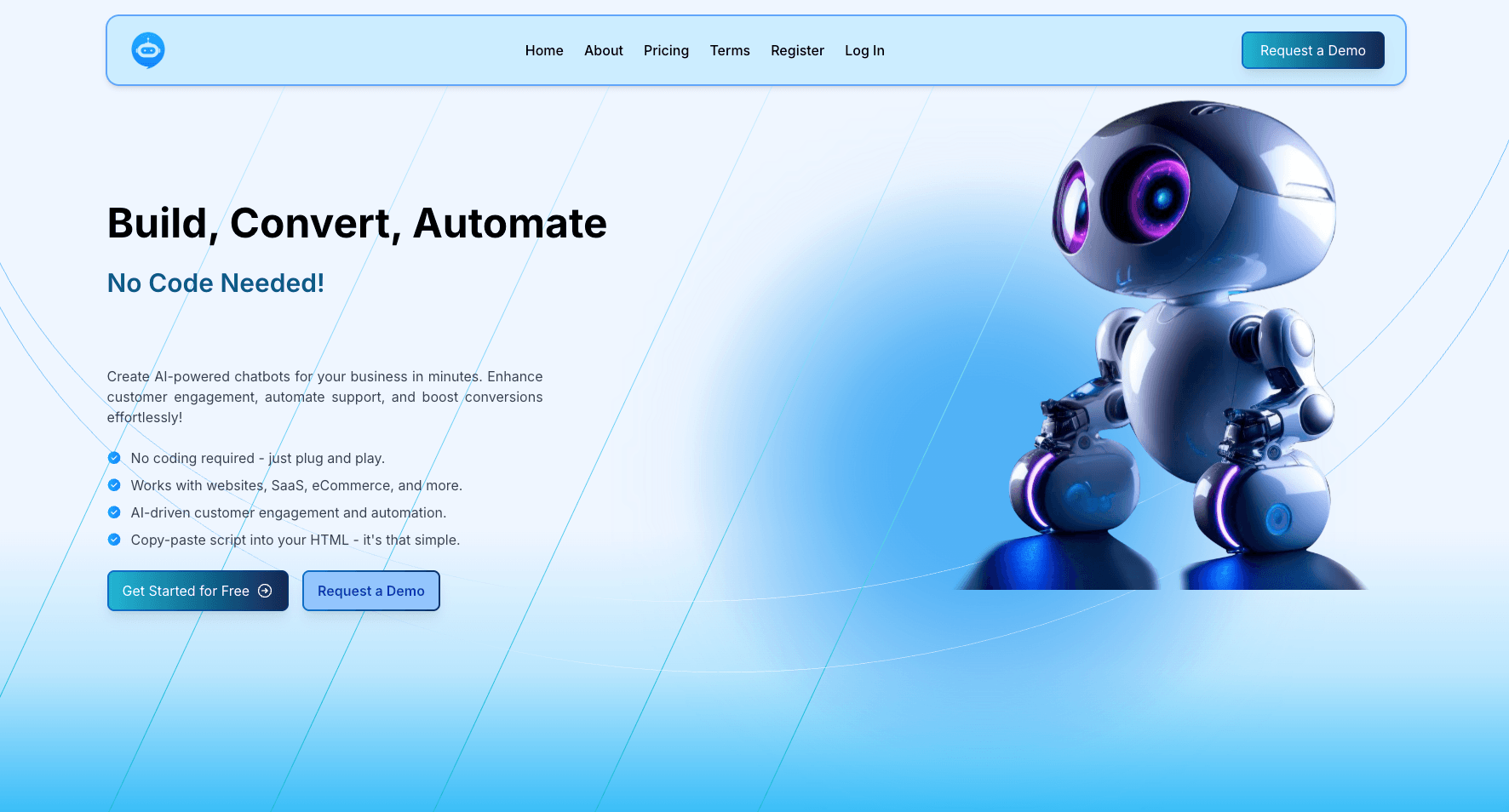
AI Assistant is a self-serve SaaS platform for building custom AI chatbots. A business points the platform at its website or uploads PDFs, and the platform reads, indexes, and turns that content into a branded chat widget that answers customer questions accurately.
The widget goes live on any site with a single embed snippet, streaming answers in real time — grounded in the business's own content rather than the model's general knowledge.
Our team owned the product from end to end: product design, frontend, backend, the retrieval-augmented generation pipeline, infrastructure, and deployment.
End-to-End Build
Engagement
Vercel + Render
Infrastructure
Conversational AI
Industry
SaaS + Chat Widget
Platform
Client Challenges
Small and mid-sized businesses answer the same customer questions over and over — pricing, policies, product details, opening hours — and their options were limited:
More support staff is expensive and still doesn't cover 24/7
Rule-based chatbots need every flow scripted and break on new phrasing
Generic AI chatbots sound fluent but hallucinate prices, policies, and features
Enterprise conversational AI is too costly and slow to set up without engineers
Business content lives across modern, JavaScript-heavy sites and PDFs
AI usage costs needed to stay predictable for both customers and the platform



The goal was a product a non-technical owner could set up in one sitting — answering only from their own content, matching their brand, with predictable costs.

Our Approach
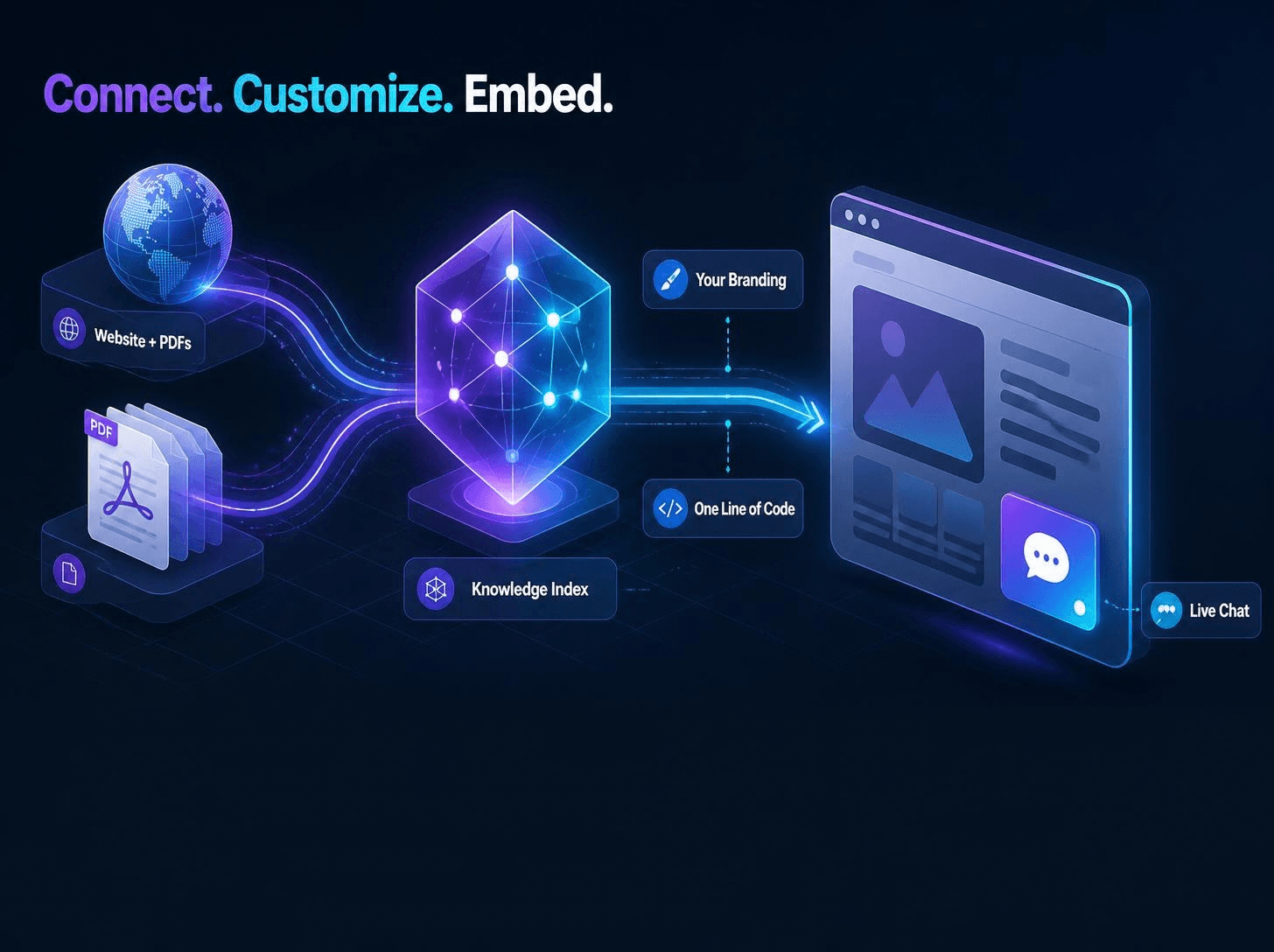
We built the platform around one simple workflow — connect your content, customise your assistant, paste one line of code:
Step 1
Content ingestion: a headless Chromium crawler for websites, plus PDF upload and re-indexing
Step 2
A RAG pipeline with embeddings in Postgres + pgvector behind an HNSW index
Step 3
A lightweight embeddable widget streaming replies in real time over WebSockets
Step 4
Self-serve branding: logos, brand colours, and per-widget behaviour
Step 5
Atomic token metering for usage-based pricing and cost protection
Step 6
Consolidating four external services onto Supabase and Resend
Grounding beats generality — customers care less about how clever the AI sounds than whether it's right about their business.
Key Features Delivered
Website Crawling & PDF Ingestion
- Puppeteer crawler renders JavaScript-heavy sites fully
- Upload manuals, policies, and price lists as PDFs
- Re-index content whenever it changes
Retrieval-Augmented Generation
- Content chunked, embedded, and stored in pgvector
- HNSW index for fast similarity search
- Answers grounded in each widget's own knowledge base
- Sharply fewer hallucinations than a generic chatbot
Embeddable Real-Time Widget
- Installs on any site with a single snippet
- Replies stream live over Socket.IO
- Lightweight and responsive on every device
Branding & Customisation
- Logo upload and built-in colour picker
- Per-widget behaviour settings
- Feels native to the business's own site
Usage-Based Pricing
- Every conversation metered by tokens
- Atomic usage counters in the database
- Usage visible to customers in the dashboard
- Protection against runaway AI costs
Dashboard & Administration
- Usage analytics and charts
- Multiple widgets per account
- Role-based access for admins and users
- Admin panel for users, content, and settings
Security & Multi-Tenancy
- JWT auth with bcrypt-hashed passwords
- Supabase Row Level Security for tenant isolation
- Helmet and rate limiting on public endpoints
- Email confirmation and password reset
Project Gallery
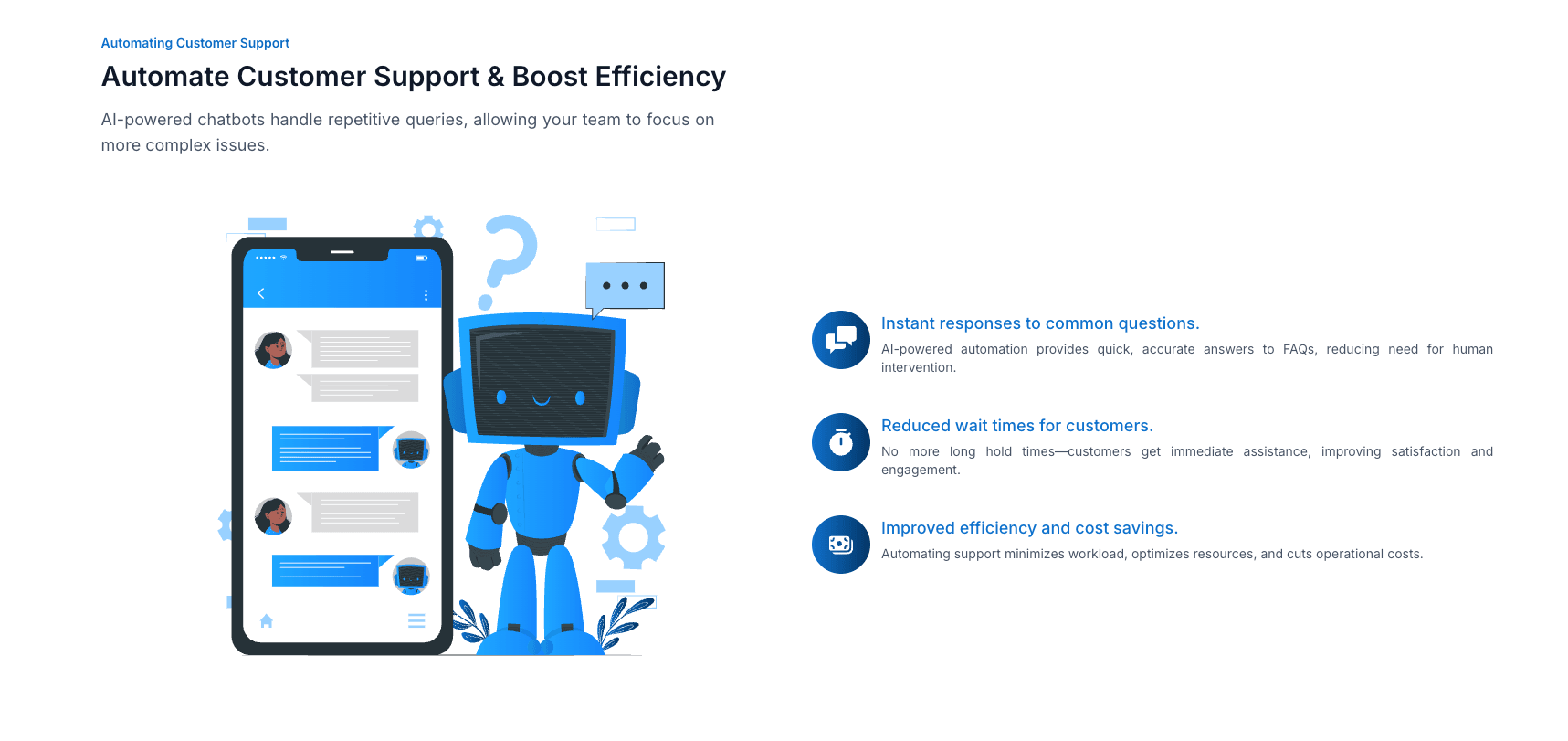
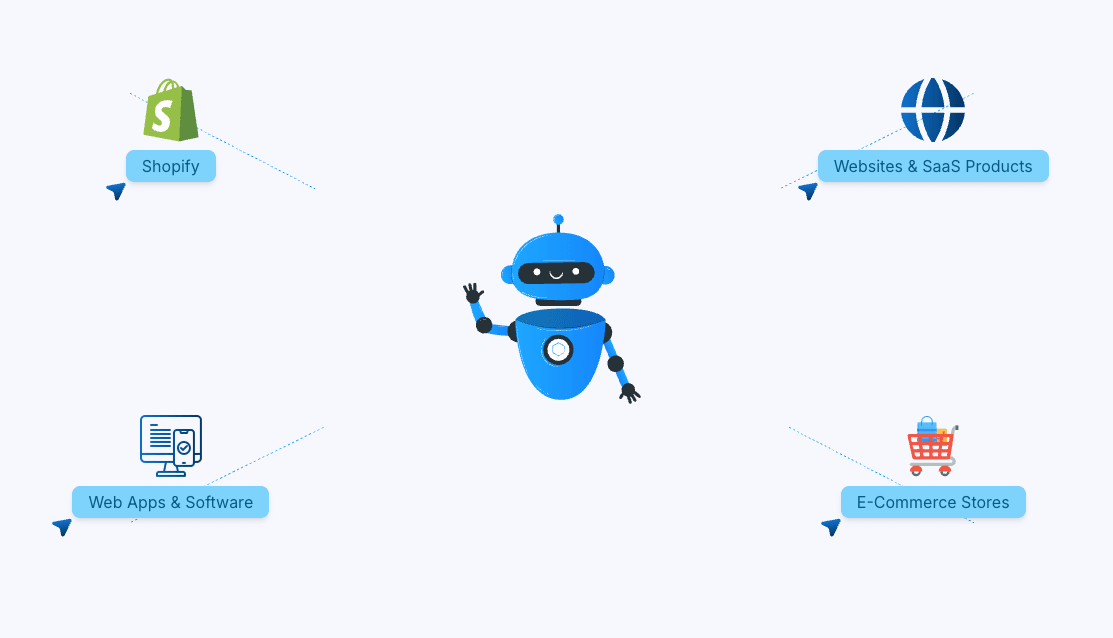
A look at AI Assistant's dashboard, widget customisation, content ingestion, and the live chat widget embedded on a customer's site.
Technology Stack
Frontend
 Next.js
 React
 Material UI
Backend & Real-time
 Node.js
AI & Retrieval
 OpenAI
Data & Storage
 Supabase
 PostgreSQL
Crawling & Email
 Resend
Hosting
 Vercel
Our Main Contributions

Product design for a one-sitting, self-serve onboarding flow
Next.js marketing site and responsive customer dashboard
Node.js / Express APIs for auth, widgets, users, and support
Puppeteer crawling and PDF ingestion pipeline
RAG pipeline with OpenAI, LangChain, and pgvector
Real-time embeddable chat widget over Socket.IO
Token metering, usage analytics, and role-based admin panel
Migration from MongoDB, AstraDB, S3, and SendGrid to Supabase and Resend
Impact & Results
Businesses go from a website URL to a live, trained chatbot in a single sitting
Routine customer questions answered instantly, 24/7, without a human
RAG-grounded answers drawn from each business's own content, with far fewer hallucinations
External managed services halved — four providers consolidated to two
Application data and vector embeddings in one database, keeping search and metadata consistent
Predictable AI costs through atomic, per-conversation token metering

AI Assistant shows what production AI looks like for small businesses: self-serve setup, answers grounded in real content, and infrastructure lean enough to run profitably.
Ready to Launch Your Project Today?
Kickstart your vision with our expert development team.